
01
Identity
Every worker operates as a named role with accountable ownership.
AI Workforce / Controls
Build identity, permissions, approvals, evaluation, observability, and retained evidence into every AI worker from the beginning.
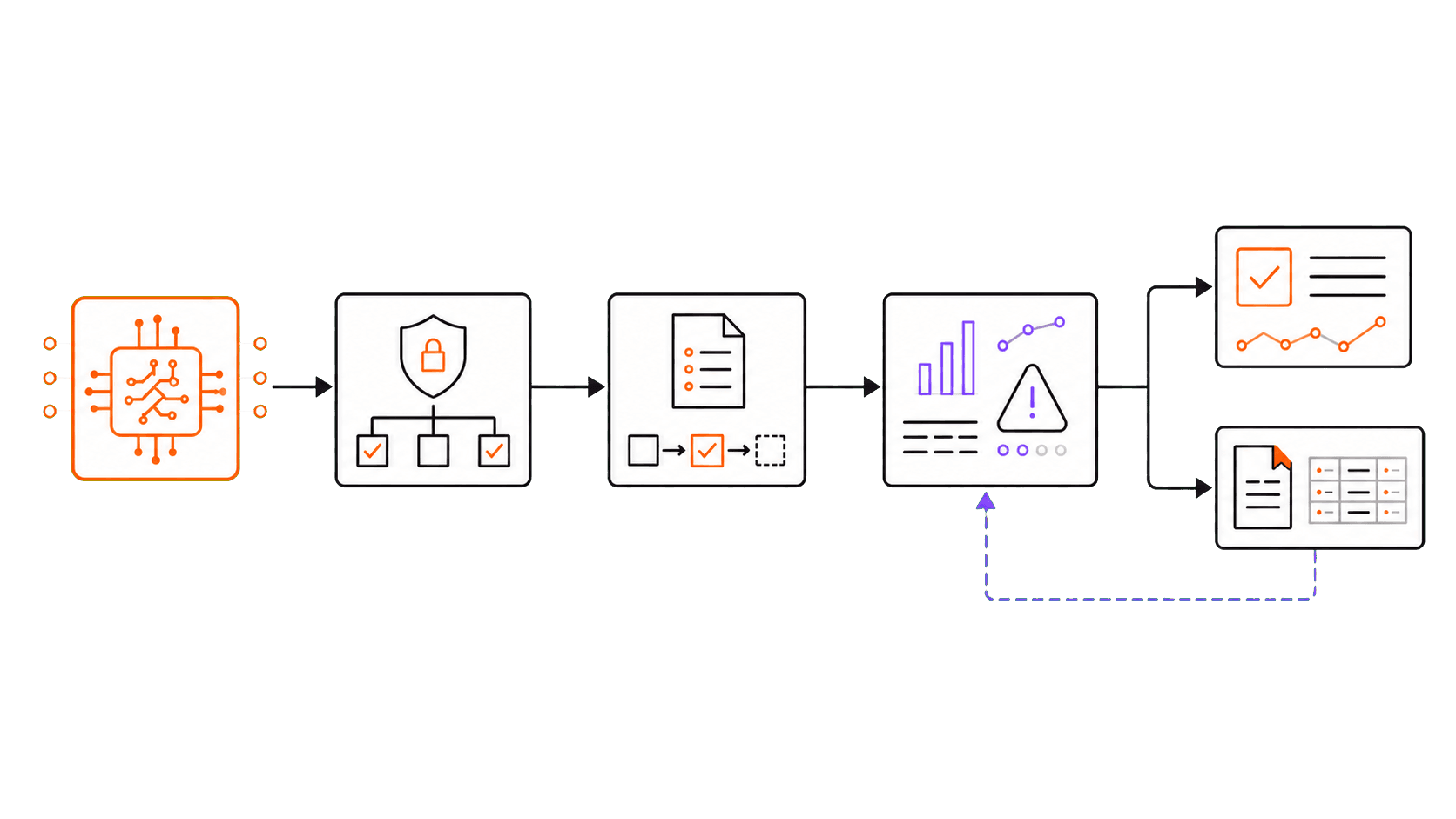
Governance by design
Governance defines what a worker may know, what it may do, when it must stop, and what evidence the organization retains.
Six control layers
Controls are connected to the role and workflow, not applied later as a generic policy document.
Every worker operates as a named role with accountable ownership.
Knowledge, systems, and actions are limited to what the role requires.
Consequential decisions pause at an explicit control gate.
Representative work tests quality, policy adherence, and failure behavior.
Activity, errors, latency, decisions, and outcomes remain visible.
Missing context, uncertainty, and exceptions follow a defined stop path.
Authority model
Read access and irreversible action should never carry the same operating authority.
Low
Read + analyze
Scoped access
Moderate
Draft + recommend
Reviewable output
High
Update + communicate
Approval gate
Critical
Commit + irreversible action
Explicit authority
Governance lifecycle
Document the role, systems, data, actions, risk level, owners, approvals, and evidence requirements.
Use representative tasks and scenarios to test expected work, edge cases, policy adherence, and failure response.
Apply access boundaries, human approvals, monitoring, exception handling, and revocation paths.
Review production performance, investigate exceptions, update controls, and document operating evidence.
Production evidence
Visible activity makes investigation, evaluation, coaching, and carefully expanded responsibility possible.
Deployment-specific assurance
Security architecture, data handling, retention, and assurance requirements are evaluated for each deployment. We do not represent certifications or controls that have not been formally verified.
Governed from the beginning